Perimenopause and Marriage Problems: When Your Marriage Feels Like a Language You've Forgotten How to Speak
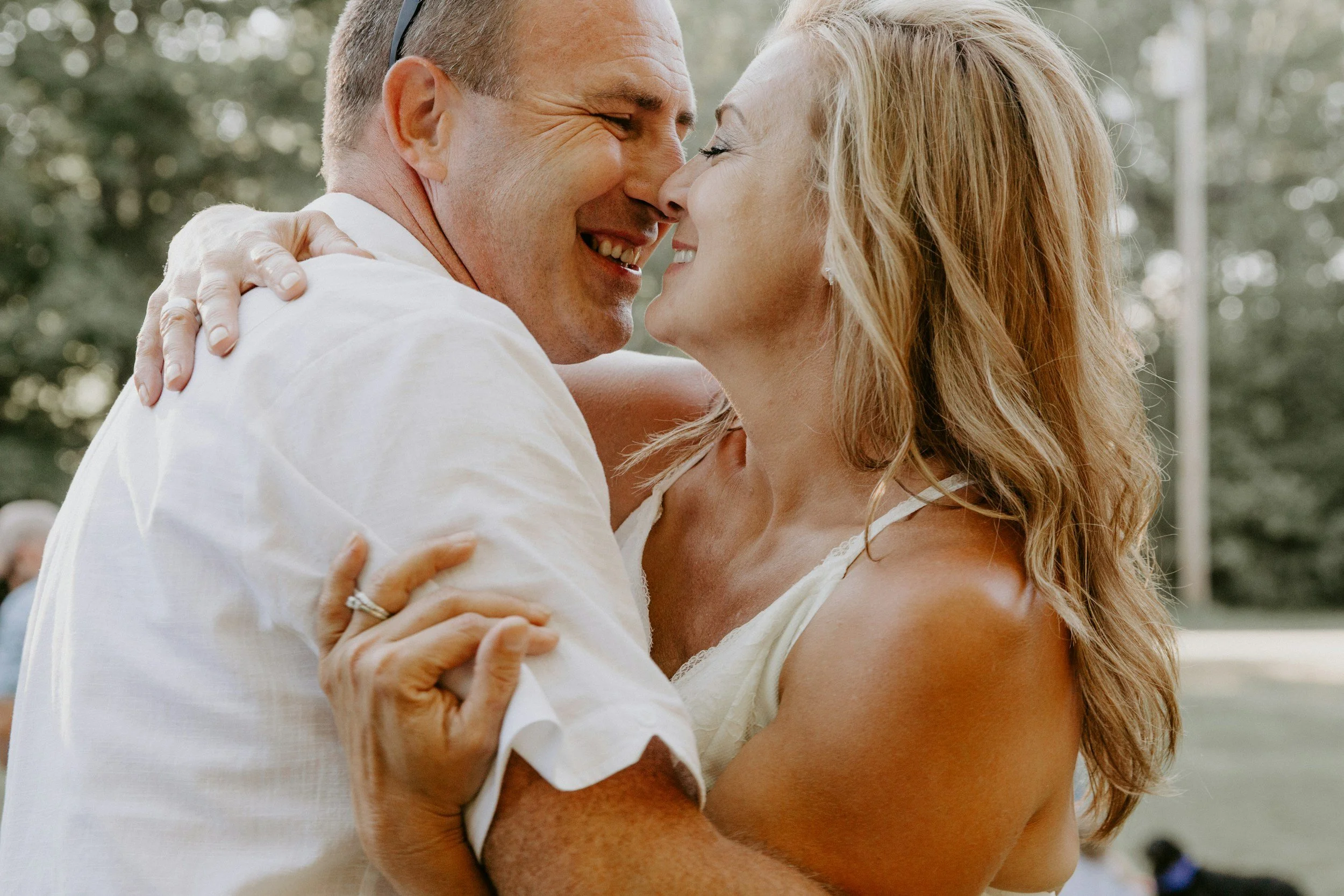
You're lying next to someone you've loved for years, maybe decades, and you feel a distance you can't quite put words to. It's not that something terrible happened. No affair, no betrayal, no single moment you can point to and say that's when it broke. It's more like a signal that's been slowly losing frequency. You’re both still there, it’s still familiar, but the relationship is harder to tune into, until one day you realize you've both stopped trying. And you look up and think, Who are we now?
If you're a woman in midlife, somewhere in the messy, unpredictable terrain of perimenopause, this might sound painfully familiar.
This post is for women in midlife who are experiencing relationship strain during perimenopause. The ones navigating shifts in sexual desire, resurfacing resentments, and the quiet grief of a marriage that doesn't feel like it used to. If that's you, keep reading.
Perimenopause doesn't just change your body. It can reshape your most intimate relationship. Hormonal shifts affect sex drive, emotional tolerance, and long-buried relational patterns, and the result is often a marriage under pressure that neither partner fully understands. The good news? With the right awareness and support, this season can become a turning point toward deeper honesty and connection rather than an ending.
How Does Perimenopause Affect Your Marriage?
Here's what nobody really prepares us for: perimenopause doesn't just change your body. It changes the way you experience everything: your energy, your patience, the things you're willing to tolerate, and yes, your most intimate relationships.
When estrogen and progesterone begin their unpredictable dance of fluctuation and decline, the ripple effects reach far beyond hot flashes and irregular cycles. Mood shifts arrive uninvited. Sleep becomes unreliable. Anxiety that you thought you'd dealt with years ago shows up again, louder this time, and the experience just lands differently. And somewhere in the middle of all of it, you realize that the marriage you've been holding together with routines and shared logistics suddenly feels… thin.
It's disorienting. Because you're not just navigating hormonal changes. You're navigating an identity shift. And that shift has a way of illuminating every crack in the foundation that was already there.
Why Does Sex Drive Seem to Disappear During Perimenopause?
Let's talk about the thing so many women feel ashamed to say out loud: I don't want to be touched right now. Maybe I haven't wanted to be touched in a long time.
A decline in sex drive during perimenopause is incredibly common. Research suggests that 40 to 55 percent of women experience low sexual desire during the menopausal transition. And it's rooted in real, physiological changes: dropping estrogen levels, vaginal dryness, fatigue that goes bone-deep, a nervous system that already feels maxed out before anyone even asks anything of you. Your body isn't betraying you. It's responding to a massive hormonal recalibration.
But here's where it gets complicated. Because even when we understand the biology, the emotional fallout is real. Your partner feels rejected. You feel guilty. Or maybe you feel angry, angry that your worth in this relationship seems tethered to your willingness to be sexual, angry that no one is asking how you feel in your own skin right now. The conversations get tense or, worse, they stop happening altogether. And the distance grows.
This isn't a failure of love. It's a moment that's asking both of you to redefine what intimacy means, and that's brave, necessary work, even when it's uncomfortable.
Why Do Old Marriage Problems Resurface During Perimenopause?
There's something else that happens during this season that catches many women off guard: issues you thought were buried, resolved, moved past, long forgotten, start resurfacing with startling clarity. And you're far from alone in this experience. Research from Newson Health found that nearly three out of four women going through menopause identified it as a factor in the breakdown of their marriage.
That pattern of him dismissing your feelings? You notice it now with a sharpness that surprises you. The way you've always been the one managing the household, the emotional labor, the invisible load of keeping everyone okay? It's no longer something you can just absorb. The resentments that simmered quietly for years while you were busy raising kids, building a career, and keeping the peace . They're boiling over now. And you can't figure out if the hormones are making you irrational or if they're finally making you honest.
Here's what I believe, both as a therapist and as someone who has had this experience herself: it's the honesty. Perimenopause has a way of stripping away the coping mechanisms that helped us survive but kept us small. The people-pleasing. The swallowing of needs. The quiet accommodation that looked like keeping the peace but was really just self-abandonment.
Your hormones aren't making you crazy. They're turning up the volume on things that have needed your attention for a long time.
Why Does Midlife Marriage Bring So Much Grief?
Oh, yes, then there’s the grief. Because midlife marriage struggles aren't just about conflict. They're about mourning. Mourning the relationship you thought you'd have by now. Mourning the version of yourself that could push through anything without complaint. Mourning the ease of earlier years, when desire came naturally and the cracks weren't so visible. It's no coincidence that divorce rates among couples over 45 have doubled in recent decades, even as overall divorce rates have declined. Midlife is when everything gets reevaluated.
We don't give women enough space to grieve in midlife. We tell them to exercise more, try supplements, rekindle the spark, as if the answer to a profound life transition is a better evening routine. But sometimes what you need first is permission to feel the weight of where you are. To say, This is hard. I am tired. And I don't know who I'm becoming yet.
That honesty, raw and unpolished, is actually the doorway to something real.
What Can You Do When Your Marriage Is Struggling in Midlife?
If you've read this far, I imagine it's because something in these words landed close to home. And I want to be careful here, because I'm not going to wrap this up with a neat bow or a five-step plan. That's not how this works.
But I will say this: what you're experiencing is not a sign that your marriage is over. It might be a sign that your marriage, and you, are ready to evolve. And that evolution, while painful, can lead somewhere breathtakingly honest.
Here's what I've seen make a difference for the women I work with:
Name what's happening: to yourself first, then to your partner. So much of the suffering in midlife marriages comes from the silence. From both people spinning separate stories about what's wrong without ever sitting down and saying, Here's what I'm going through. Here's what I need. You don't have to have it all figured out to start the conversation.
Separate the hormones from the history, and honor both. Yes, your body is changing in ways that affect your mood, your desire, your capacity. And yes, there are likely relational patterns that predate perimenopause and need their own attention. Both things are true. Working with a therapist who understands the intersection of hormonal shifts and relational dynamics can help you untangle what belongs where, without dismissing either one.
Redefine intimacy on your terms. If penetrative sex feels painful or unappealing right now, that doesn't mean intimacy is off the table. It means the table needs to look different. Touch that feels safe. Emotional closeness that isn't a transaction for physical closeness. Conversations that go deeper than logistics. Intimacy is connection, and connection can take a thousand forms.
Give yourself permission to take up space. Maybe for the first time. You are allowed to have needs that aren't convenient. You are allowed to change. You are allowed to ask for a relationship that reflects who you are becoming, not just who you were.
How Can Individual Counseling Help Your Marriage During Perimenopause?
I know the word "counseling" can carry weight. Maybe it sounds like admitting defeat, or maybe you've suggested it before and your partner shut it down, or maybe you're just not sure what it would even look like in the middle of everything you're already carrying.
So let me paint the picture a little, because I think it matters.
When a woman in perimenopause walks into an individual counseling session, something powerful happens. She finally has a space where the full complexity of her experience is welcome. Not just the marriage stuff. Not just the hormone stuff. All of it, together, the way it actually lives in her body and her days.
A therapist who understands this season can help you begin to untangle what's been building for years from what's being amplified by hormonal shifts, without dismissing either thread. Because here's what often happens without that support: you start questioning yourself. Am I overreacting? Is this just the hormones talking? Have I always been this unhappy, or is this new? Individual counseling gives you a space to sort through those questions honestly, without the pressure of managing your partner's reaction at the same time.
Sometimes the most important relationship to repair first is the one you have with yourself. Learning to trust your own perceptions again after years of second-guessing. Reconnecting with the wants and needs you set aside somewhere along the way. Getting clear on what you actually feel versus what you've been told you should feel. That kind of inner work changes everything. Because when you start showing up differently in your own life, the relational dynamics around you begin to shift too. Not always in the direction you expect, but almost always toward something more honest.
In individual counseling, you get to explore what intimacy means to you now, what boundaries you need, what resentments have been quietly running the show, all without performing okayness for anyone else. You get to fall apart a little in a safe place so you don't have to keep falling apart everywhere else.
And if you reach a point where couples work feels like the right next step? I'm happy to recommend trusted couples counselors who can hold that space for both of you. Sometimes the most powerful thing you can do for your marriage is to show up for yourself first, and trust that showing up for yourself has a way of changing everything around you.
Individual counseling isn't about saving a marriage at all costs. It's about helping you get clear: clear about what you need, what you're willing to work toward, and what kind of partnership you want for the life you're building now. That clarity, even when it's painful, is a gift.
Are You Ready to Get Support for Your Midlife Marriage?
If you're in midlife, navigating perimenopause, and feeling the strain in your marriage, I want you to know that seeking support is not a sign of weakness. It's one of the bravest things you can do.
Whether you're looking for counseling in Fort Collins or prefer the flexibility of online counseling in Colorado, having a therapist who understands the unique intersection of hormonal changes, long-term relational patterns, and the emotional complexity of this life stage can make a world of difference. You deserve a space where you don't have to explain or justify what you're feeling. A space where someone simply gets it.
At Megan Silberhorn Counseling, this is exactly the kind of work I do. I specialize in supporting women through anxiety, complex trauma, and the profound transitions of midlife. If something in this post resonated with you, I'd love to talk. We'll figure out together what support could look like for you.
You're not falling apart. You might just be falling into the truest version of yourself. And that, even when it's messy, is worth showing up for.
About the Author
Megan Silberhorn is a therapist and owner of Megan Silberhorn Counseling in Fort Collins, Colorado. She specializes in anxiety, complex trauma, and supporting women through the emotional and cognitive challenges of midlife and perimenopause. If you're ready to stop white-knuckling it alone, she'd love to hear from you.
FAQ
-
Yes. The hormonal fluctuations of perimenopause, including shifts in estrogen, progesterone, and testosterone, can affect mood, energy, patience, and sex drive, all of which directly impact how you show up in your relationship. Perimenopause can also lower the emotional bandwidth that allowed you to tolerate long-standing relational patterns, bringing unresolved issues to the surface with new urgency.
-
t's very common. Declining estrogen levels can reduce libido and make physical intimacy feel less appealing or even uncomfortable. This isn't a reflection of your love for your partner. It's a physiological shift. Many women find that redefining intimacy beyond sex and working with a therapist who understands these changes helps restore closeness in new ways.
-
Often, it's both. Perimenopause can amplify issues that were already present but manageable, things like emotional labor imbalances, communication breakdowns, or unspoken resentments. A therapist who specializes in women's midlife transitions can help you sort through what belongs to the hormonal shifts and what belongs to the relationship, so you can address both with clarity.
-
Individual counseling can be a powerful first step. It gives you space to process what you're experiencing, the hormonal changes, the identity shift, the relational strain, without the pressure of managing your partner's reactions. Once you've gained clarity about your own needs and boundaries, couples counseling may be a natural next step if both partners are willing.
-
Absolutely. While perimenopause puts real strain on relationships, many couples find that navigating this transition, or supporting each other through individual growth, leads to a deeper, more honest partnership. The key is awareness, communication, and a willingness to let the relationship evolve alongside the people in it.